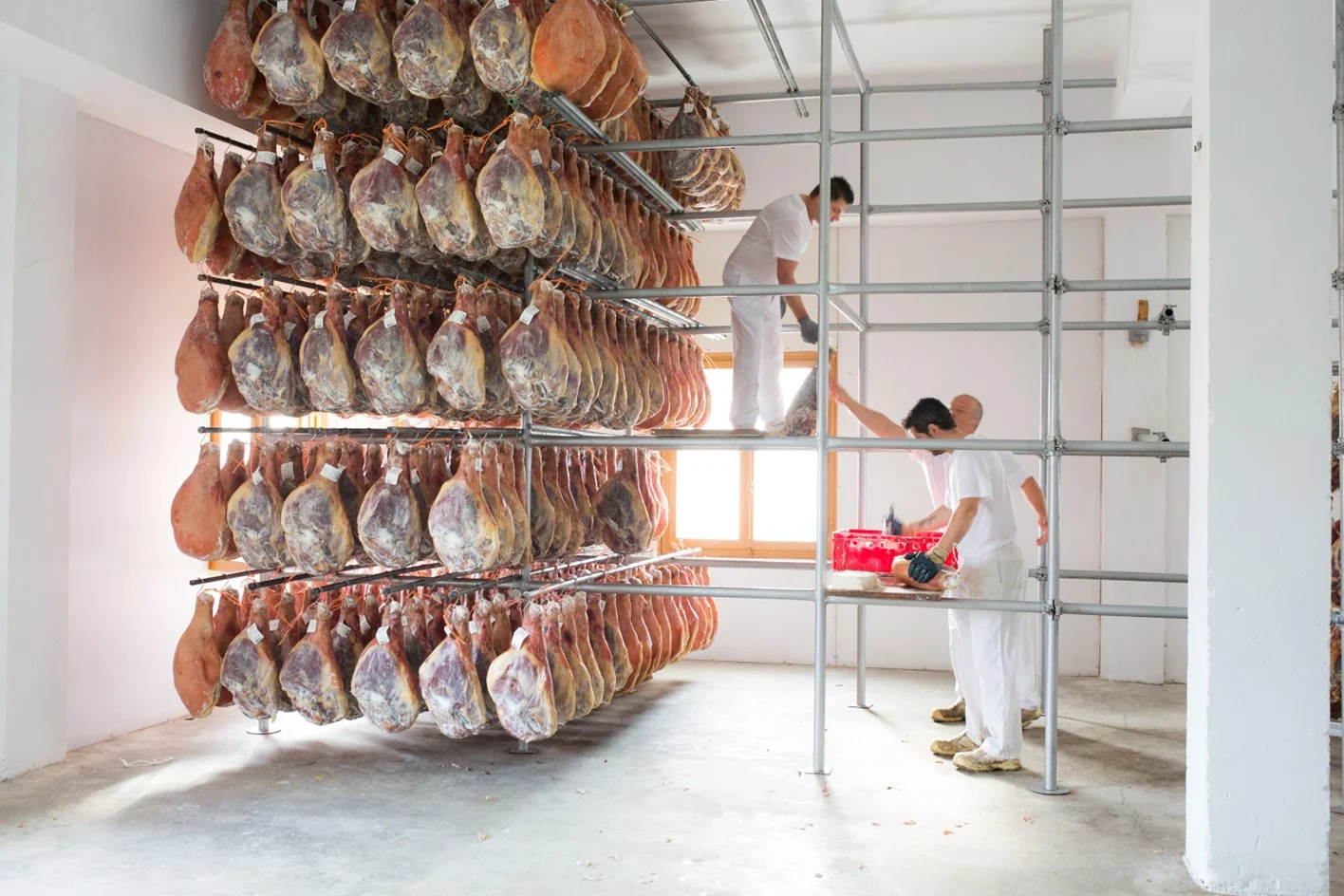
In earlier articles we described receiving, salting and resting our hams. Today we discuss coating them with lard, an essential stage that we carry out by hand to ensure an even cure throughout the piece while protecting it from mites and mould.
Around six months after arriving at our premises, our hams have been salted and have passed through winter. It is time for spring and summer, stages spent in our natural, air-ventilated curing rooms and in the cellars where we finish maturing them.
Preparing each ham for this new stage is essential. We do it by coating it with lard, entirely by hand, one piece at a time.

Image 1. Applying lard to ham by hand
What does the lard do?
Pork lard forms a barrier, covering cracks and preventing air or mites from entering and causing unpleasant odours.
Although this process has been industrialised, we do it by hand, applying lard wherever meat is exposed and paying particular attention to two areas: the hip bone and the tip of the ham.
Coating with lard is essential in ham production. It is one of the slowest and most labour-intensive processes, but it ensures proper drying and protection from mites.
A good coating of lard helps us achieve a good ham.
Comments (0)