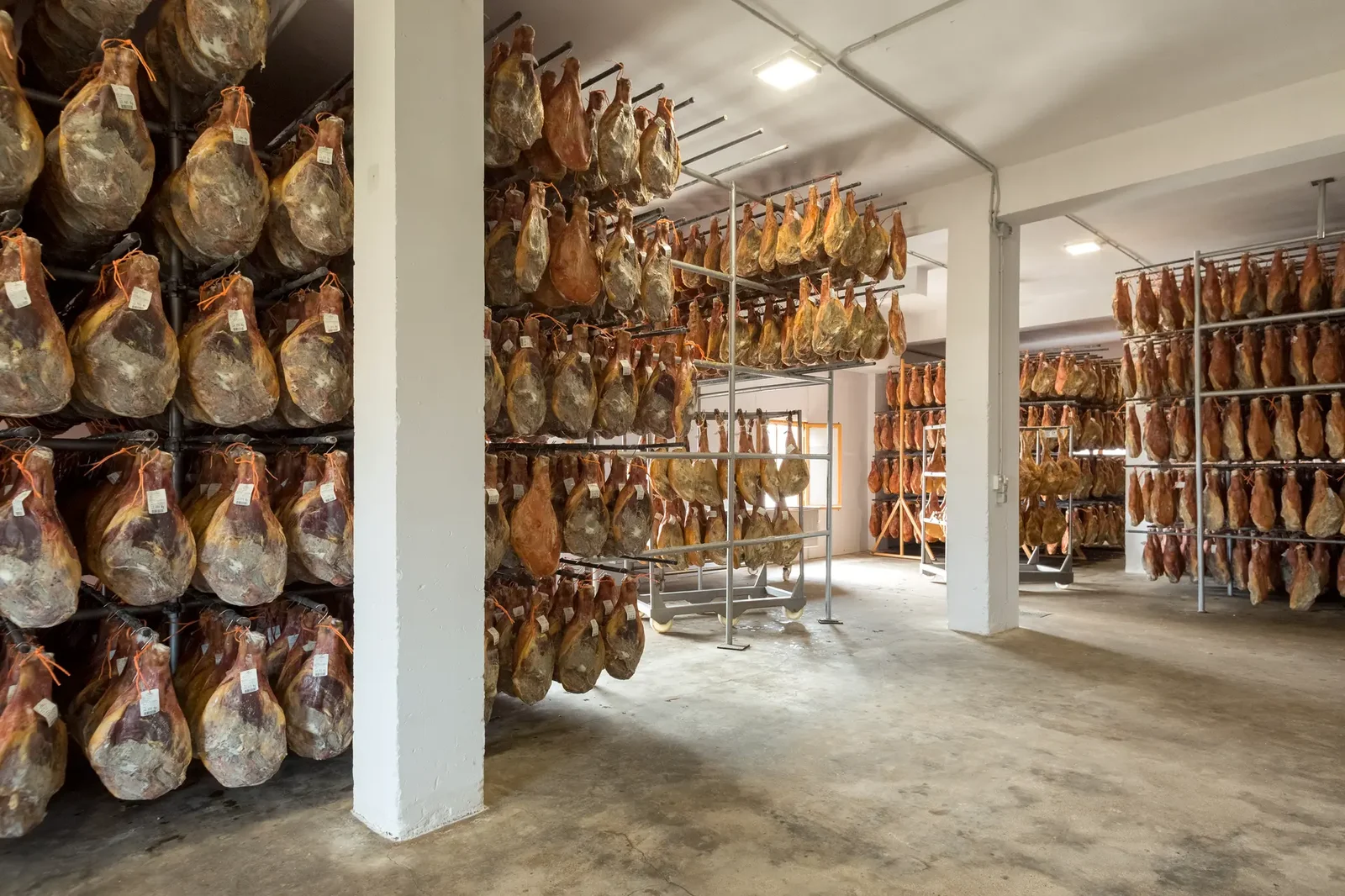
Once the hams have been salted, washed and rested, the drying stage begins.
As we explained in the previous article, pigs were traditionally slaughtered and hams prepared in the cold winter months. Those cold months were used to salt and mature the ham into a stable product, ready to continue maturing in spring.
Natural air drying
We make ham throughout the year, but we have a particular affection for ham that follows this traditional process and cures in our natural drying rooms. Spring is ideal for the ham to lose moisture and develop flavour as the weather warms. By May—as the saying goes, rainy April and windy May—the Ebro Valley winds, known as the cierzo, provide good drying conditions.
To dry the ham correctly, the master ham maker opens or closes the windows each day according to the weather, opening them on windy days and protecting the ham on rainy ones.
After spring, the ham is around six or seven months old. It is time to protect it with lard so that it can continue maturing without drying excessively during the hot summer months.
Controlled drying
As you know, spring warmth often arrives early in the Ebro Valley. We therefore need to protect our ham, moving it into controlled drying rooms when necessary. There it can dry gradually at temperatures between 8 and 12 °C and relative humidity between 65 and 75%.
During both natural and controlled drying, the ham's reds and yellows deepen, its fat matures and its meat becomes firmer. Towards the end of this process, it is normal for the ham to start sweating and develop Penicillium moulds. Together with the lard, these moulds protect it through summer, allowing maturation without a hardened outer crust—but that is another chapter!
Comments (0)